Sunday, 31 August 2014

305 | NÖTIGE DISTANZ ZU WILDEN TIEREN HALTEN!

CONSERVATION

Nötige Distanz zu wilden Tieren halten!


Wenn Dank eines jeden Besuchers eines Landes zehn Arbeitsplätze geschaffen werden, sprich zehn Menschen eine Arbeitsstelle erhalten, dann ist Tourismus ein bedeutsamer Wirtschaftsaspekt. Und genau so ist es im südlichen Afrika. Somit bedeutet es das Juwel, welches den Tourismus lockt und der Bevölkerung Arbeitsplätze beschafft, zu erhalten. Und dieses Juwel ist im südlichen Afrika die Natur; Tiere, Pflanzen und Landschaft. Damit aber die Bewohner des südlichen Afrika auch in Zukunft etwas von dem Tourismuskuchen abbekommen, muß die Natur, das Juwel, nachhaltig bewirtschaftet werden. Aber diese einfache Rechnung scheint von manchen Menschen und Ländern noch nicht begriffen worden zu sein. Während einer 9-tägigen Reise durch ein gewisses Land war in einem bekannten Nationalpark zu erleben wie Elefanten nach dem durchschwimmen eines Flusses erschöpft an Land angelangt, von einem mit Gästen beladenen Boot bewußt angescheucht wurden. In einem weiteren Nationalpark steuern Fahrer und Gästeführer die mit Gästen beladenen offenen Geländewagen vom Wege ab und umzingeln eine sichtlich nervöse Gepardin mit ihren zwei Welpen an deren frisch gerissener Impala Antilope. Im selbigen Nationalpark wird bewußt nah an Wasserböcke rangefahren um sie in Galopp zu versetzen. Etwa 80 Meter ab vom Wege befindet sich ein Löwe und daneben ein Selbstfahrer Auto. Der Gästeführer, gleichzeitig auch Faher des offenen Geländefahrzeuges, sagt zu seinen Gästen: Es sei illegal vom Wege abzufahren, aber sobald kein sich näherndes Fahrzeug in Sicht sei, würde er schnell dorthin fahren damit seine Gäste den langersehnten Löwen sehen könnten. In einem kurz zuvor unter UNESCO Weltnaturerbe gestellten Sumpfgebiet wird ein Gästeboot direkt an einen Busch mit einer Riedscharben Brutkolonie angelegt, worauf die Altvögel panisch ihre Brutnester verlassen. Eindeutig passiert dieses regelmässig, denn sofort fliegen Nesträuber ein. Angola Spornkuckucks, Glockenreiher und Schlangenhalsvögel machen sich über ungeschützte und wehrlose Küken her. Teilweise springen ein paar Küken aus lauter Verzweiflung ins Wasser, können jedoch noch nicht schwimmen. Oder es wird so nah an am Ufer liegende und sich an kalten Wintertagen sonnende Krokodile gefahren bis diese sich bewegen und fluchtartig ins Wasser springen, worauf Kameras nur so klicken und ein Raunen durch die Reihen der Gäste geht.
Gilt dies Raunen der Begeisterung oder der Empörung? Ein Raunen der Begeisterung kann nur von einem entweder unaufgeklärten oder völlig egoistischem Gast, dem das Morgen egal ist, kommen. Denn diese Ereignisse sind ganz sicher kein nachhaltiger Tourismus! Auch erwirkten sie vielleicht einmalige Fotos, aber dies darf die Antwort nicht sein. So braucht es nicht nur er staunen wenn in wenigen Jahren keine dieser betroffenen Tiere mehr zu sehen sind, sondern dies Land nicht mehr bereist wird weil Armut oder Ähnliches zu Unruhen oder Sonstigem im Land führten. Heisst es dann wie so häufig zu hören: Typisch Afrika!? Oder sind wir als an solchen Ereignissen schweigend teilnehmende Gäste stückweit mit Schuld an dem Dilemma?
Deswegen folgender Aufruf: Sagt NEIN zu einem zu naherücken an Wildtiere. Die Erfahrung hat bewiesen daß es die Mitverantwortung der Gäste ist, einen in dieser Hinsicht verantwortungslosen Gästeführer (Guide) zur Vernunft zu bringen und aufzuklären.


Wednesday, 18 June 2014

274 | TRAVEL & HELP

274


Art. # 274

SUPPORT AWARD (Welfare, Conservation and Tourism division)
TRAVEL & HELP (Tourism division)

Travel & Help

Text and photo by Stefan Rust
2014

(In terms of the Geneva Convention the copyright of these texts belong to Stefan Rust)


In this age traveling becomes more and more important to people around the globe. To keep an eye on nature and the people and to balance tourism, welfare and conservation, BirdsConTour gives back by investing in welfare, conservation and tourism projects.

By traveling directly with BirdsConTour or making use of a guide from BirdsConTour you support our welfare, conservation and tourism projects and create an economic platform for local livelihoods. Sometimes travelers also participate in another BirdsConTour project. To say THANK YOU, every tour participant receives a Tourism Support Award at the end of the tour.
Travelers from all over the world are awarded with a BirdsConTour Tourism Support Award, such as travelers from Switzerland, Netherlands, Germany and Namibia.


Eight German-speaking guests were rewarded with Tourism Support 2014 Awards:

Böker Brigitte
Fronhoff Dr. Katrin
Goetz Dagmar & Wolfgang
Koch Olivia
Saalbach Gabriele & Kurt
Winkelmeyer Sylvia

This Moremi Tour, organized by Pack Safari and Chamäleon Reisen, and led by BirdsConTour, took place from the 1st of June until the 15th of June 2014.

(Please note that all award recipients are listed in an alphabetical order in article 71 and 277 under www.birdscontour.blogspot.com.) 

273 | CLEANING THE ROUTES TRAVELED

273


Art. # 273

CLEAN WORLD (Conservation division)

Cleaning the routes traveled

Photos and text by Stefan Rust
2014

(In terms of the Geneva Convention the copyright of these texts belongs to Stefan Rust)


It is usually assumed that cleaning the country is the role of the government. However, BirdsConTour assists in meeting this challenge, not least because our visitors want to enjoy a clean country. It’s really about creating a secure environment for wildlife and birdlife to live in in the long term.


Black garbage bags and a tool for collecting litter are always part of the luggage and wherever time is available and litter is lying around next to the road traveled, a cleaning stop is arranged. Simultaneously this offers a break from the tiring driving and gives everybody the chance to stretch his or her legs while doing something productive.
Guests react very positive to this project and mostly assist in picking up litter.
There is simply no better way of keeping the roads traveled clean and leaves a good impression on the guide, the tour company and finally even on the country and its people.
This Clean World campaign is and has been cleaning areas in South Africa, Botswana, Zimbabwe, Namibia and Germany.


MOREMI TOUR (Zimbabwe-Botswana-Namibia) (01.06. – 15.06.2014)
(A Chamäleon Reisen and Pack Safari Tour guided by Stefan Rust from BirdsConTour)


On the 11th a picnic area next to the A3 road leading from Ghanzi to Maun, Botswana, was freed from litter.
Members of an eight German speaking guest group participated in collecting litter.
THANK YOU for participating! 

272 | IT'S TIME TO SHOW YOUR ART SKILLS

272


Art. # 272

ART FOR LIFE (Welfare division)

It’s time to show your art skills

Text by Stefan Rust
2014

(In terms of the Geneva Convention the copyright of these texts belongs to Stefan Rust)


Good artworks start with passion!
The BirdsConTour Art for Life project aims to inspire artists of all levels from all over the world and invites artists to show a picture of their artwork in this space.

The creative project Art for Life carries the message of promoting welfare and conservation through tourism to a far wider public audience than ever before through the communication medium of art.
Art is unquestionably one of the best options to spread the word of welfare and conservation and marketing tourism, particularly if one reaches beyond the borders.
The BirdsConTour Art for Life project supports artists worldwide, up till now in Namibia and Botswana.


Artwork:
Ombukushu Walking Stick

         
             The stick above displayed in more detailed pictures

Title:
Ombukushu Wooden Stick

Art Form:
Woodcarving

Artist:


Mr. Rector Tetuka, from the Hambukushu Tribe

Country:
Namushasha River Lodge, Zambezi/Caprivi Strip, Namibia

BirdsConTour Comment:
The Mbukushu people, living in the Kavango Region of the Okavango River in Namibia, are renowned for their high-quality woodcarvings. Animal figures, masks, wooden mugs, boxes and wooden sticks are carved out of the light wild teak (dolfhout) hardwood. A lot of culture and wildlife in the Caprivi/Zambezi Region makes a top traveling experience.

Please send a picture of your artwork with your name and country, the artwork title and its form by e-mail to birdscontour@iway.na (with ‘Art for Life’ in the subject line) or by letter to Art for Life, BirdsConTour, P.O.Box 5182, Windhoek, Namibia.
Please note that BirdsConTour can’t guarantee to publish all artworks.

271 | LIVING NEXT DOOR TO ELLIES (ELEPHANTS), LIANSHULU BUSH LODGE

271


Art. # 271

SUPPORT AWARD (Welfare, Conservation and Tourism division)
NATURE CONSERVATION MEASURES (Conservation division)
AIDING WINGS (Welfare division)
SUSTAINABLE TOURISM (Tourism division)
TRAVEL & HELP (Tourism division)

Living next door to ellies (elephants), Lianshulu Bush Lodge

Photos and text by Stefan Rust
2014

(In terms of the Geneva Convention the copyright of these texts belongs to Stefan Rust)

Conservation is not only the responsibility of the government and NGOs. It is also the obligation of every citizen, especially people in the tourism sector.


The aim of the Support Award project is to let people feel that their action in taking responsibility gets recognized. Every practice in the interest of welfare, conservation and tourism, no matter how big or small, counts.
Lianshulu Bush Lodge, situated right in the Mudumu National Park, uses an effective technique to live next door with elephants, chili bombs. Mixing elephant dung 50/50 % with broken chilli produces a chilli bomb. In the event of elephants coming close to the lodge infrastructure, hot coals are placed on the bombs, and the intensive smell keeps the giants at bay. Another method is to soak material in a mixture of old engine oil and chillies, and hanging them from wire, forming a ‘chilli fence’.
This way the lodge is safeguarded and staff together with their valued guests doesn’t come into confrontation with the elephants.
With these sustainable techniques the Lianshulu Bush Lodge protects elephants and contributes to establish wildlife corridors through which, in this case elephants, can move freely.
The chillies needed for these practices are bought from small-scale farmers, assisting to make a difference to rural households.
For these novel management methods, BirdsConTour honored the Lianshulu Bush Lodge with all three Support Awards, the Welfare Support 2014 Award, Conservation Support 2014 Award and the Tourism Support 2014 Award.

276 | AIDING WINGS

276


Art. # 276

ONLY AN INFORMED AND A CONTENT SOCIETY CAN INDULGE IN CONSERVATION

Aiding Wings, Giving a push
Aiding Wings, Cooka Boo and social guests

Photos and text by Stefan Rust
2014

(In terms of the Geneva Convention the copyright of these texts belongs to Stefan Rust)


International operating BirdsConTour (Birds Conservation & Tourism) formed the non-religious and non-political charity program Aiding Wings.

Aiding Wings works to motivate people and to improve the lives of people, ultimately to generate a nature conservation conscious community.
BirdsConTour believes that only an informed and a content society can indulge in sustainable nature conservation.
BirdsConTour Aiding Wings supported the Ngatuve Vatere Orphanage in Namibia and the Cooka Boo TB and HIV Management Station in Botswana.

Another campaign of Aiding Wings was successfully accomplished:

Giving a push:


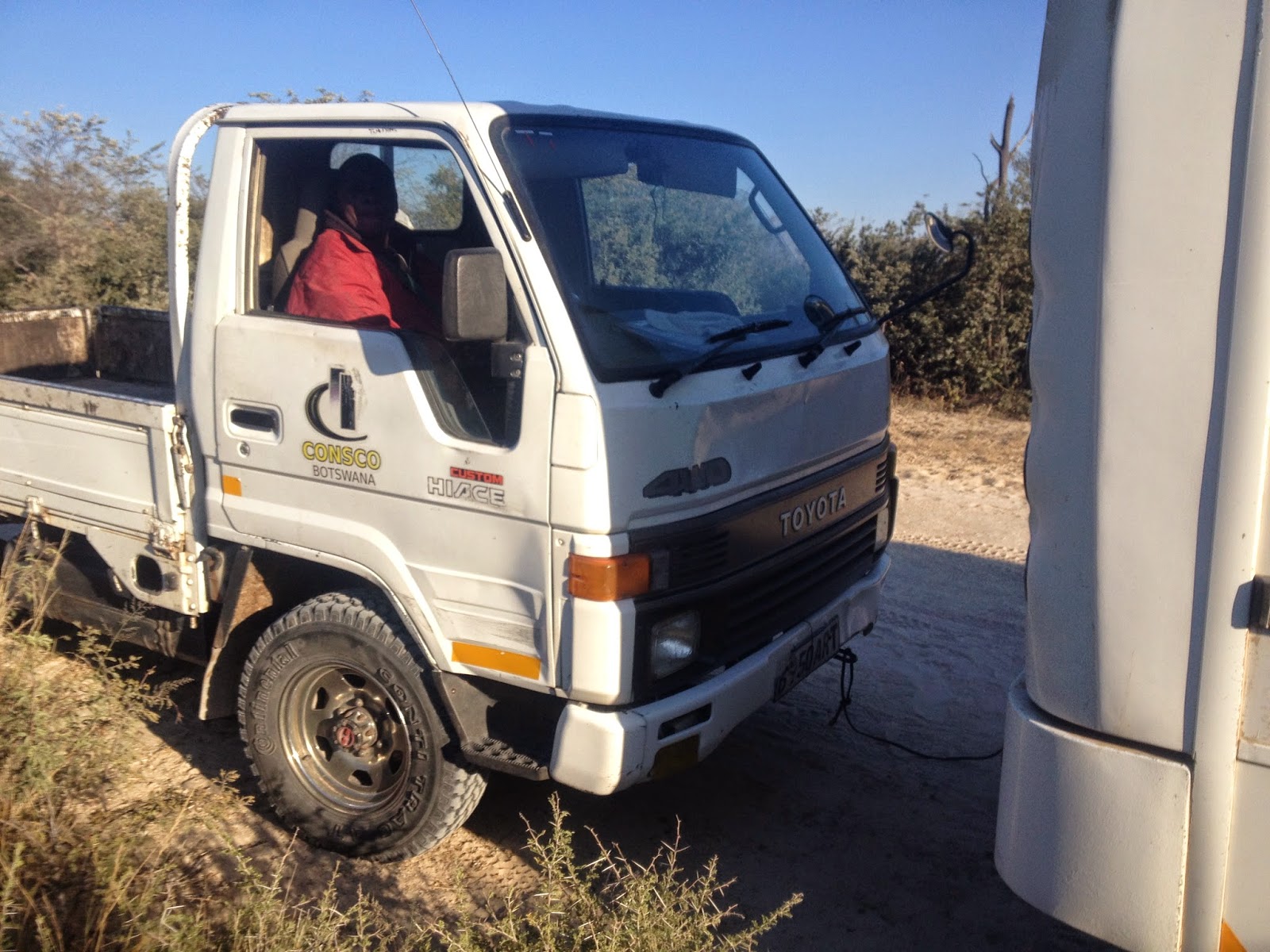
Early in the morning of the 8th of June the Moremi Tour group came pass a vehicle breakdown along the roadside to the Tsodillo Hills, Botswana. Members of this eight-guest tour group, traveling from Zimbabwe via Namibia to Botswana, assisted in pushing a small truck in an attempt to get the engine running again, but without success. But towing the truck with the tour bus was successful. The breakdown incident forced the operators of the truck to sleep next to this remote road while during this night the temperature dropped to only 1 degree Celsius above freezing point. The Botswana people were thankful and smiling for the help by the tour members and the guests in return enjoyed lots of fun.

Cooka Boo and social guests:


BirdsConTour initiative Aiding Wings supports tuberculosis (TB) and HIV management by having delivered First Aid products, generously sponsored by Mrs. Olivia Koch, Mrs. Dagmar Goetz and Mrs. Brigitte Böker, to Cooka Boo, a TB and HIV management station in D’Kar, situated within the remote Ghanzi district of Botswana.

The managers, Mrs. Goitshwalamgemang Ditsheko (left) and Mrs. Onkemetse Maruping (right) of Cooka Boo confirm the fact that the Ghanzi district has the highest TB notification rates in the country. Knowing that the underlying cause of TB is poverty and that with the advent of HIV and AIDS, Botswana reached by 2005 a TB notification rate of 602 per 100 000 (one of the highest globally), the Kuru Family Of Organisations (KFO) fights TB with a systematic programme, targeting this primarily poor people’s disease by having assigned this task to its subsidiary, the Letloa Trust.
‘Cooka Boo’ and ‘Re Batla Botshelo’ means ‘We Want Life!!!’

BirdsConTour would like to thank the Sponsors, Volunteers and Contributors to the Aiding Wings program! 

275 | TRIGGERING TRAVELING

275


Art. # 275

TRIGGERING TRAVELLING (Tourism division)

Triggering Travelling

Photos and text by Stefan Rust
2014

(In terms of the Geneva Convention the copyright of these texts belongs to Stefan Rust)


Traveling with BirdsConTour gives reason to scream out loud full of joy, because our mission is: Welfare and conservation through traveling! Doesn’t that give you peace of mind while exploring the world?

It is appropriate to add this ‘Triggering Travelling’ space to the Words of Feather editions, electronic and paper. Up till this stage BirdsConTour has grown so well that people are longing to read about fascinating aspects that one can encounter while travelling. The wonderful thing about this column is that BirdsConTour will be writing about a broad spectrum of subjects, some you might have come across while travelling, sending you down memory lane, or some subjects that might trigger your interest in wanting to pack your travel suitcase and head off to new experiences.
BirdsConTour has travel experience all around the globe:
Ecuador-Galapagos, Namibia, Botswana, Zimbabwe, South Africa, Germany

Botswana – a brief history


Magma erupted from deep below onto the surface about 90 million years ago, creating huge craters, leaving solidified fissures of rock or kimberlite pipes, now supplying Botswana with diamond wealth. During this time the Limpopo River drained the vast northern region of southern Africa. But when around 60 million years ago an uplift began to cut off the Limpopo River, inflowing water accumulated north of the rising ridge, forming the Makgadikgadi depression. Simultaneously rainfall in the interior of southern Africa was reduced by a natural reorganization of the continents through that Antarctica became isolated and the southern oceans cooled, leading to a high-pressure system cutting off the moisture supply from the Atlantic. This resulted in the development of grassland and in response the herbivores began to diversify.
Some 20 million years ago, the rift faults of the encroaching East African rift have routed the Okavango River into an 1.5 million ha sized fan known as the Okavango Delta. Environmental changes in the last 2 million years, fluctuating from being wet and dry, caused the 60 000 square kilometer large Makgadikgadi lake to fill up or being dry as for now. Sometime in this period human appeared on stage as stone tools document, dating back hundreds of thousands of years. Some 2 000 years ago people with domestic cattle arrived and up till today the domestic cattle has remained.

      
Okavango Delta                            Cattle                                                  Diamond – A girls best friend

Today Botswana’s tourist industry depends on these cattle, kimberlite diamonds, and the grassland-adapted herbivores with their natural hunters and the country’s myriad ethnic groups.

Have a safe journey
BirdsConTour

Your partner in travel business!